
Strategic alignment
Don't guess the future: design it. Alignment on clear goals, retrospectives that turn mistakes into learning, and structured innovation, for teams planning the year, launching a new direction, or feeling like the strategy only exists in slides.
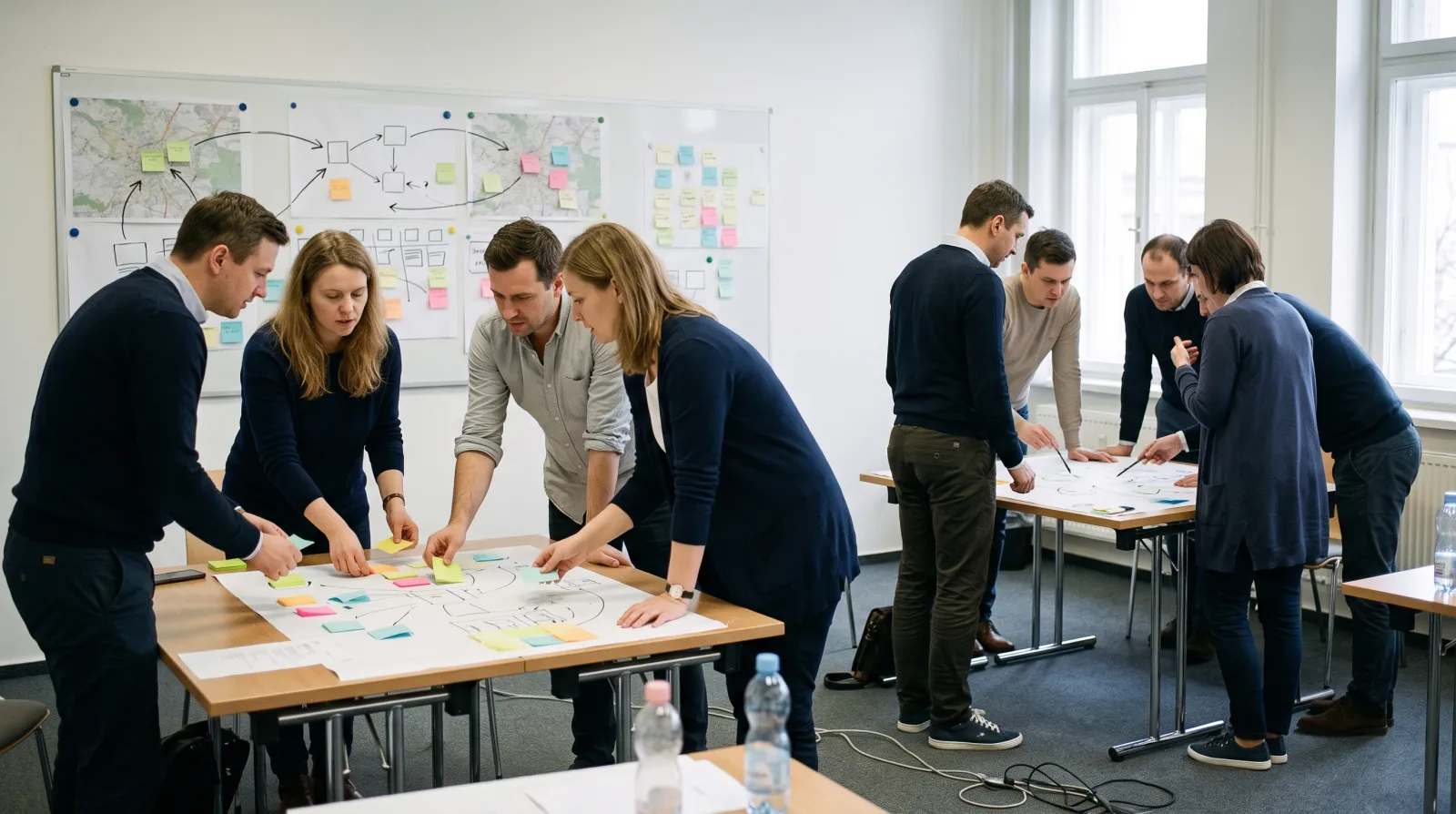
Sound familiar?
Everyone says "yes" in the meeting. Objections show up in the hallway. Silent agreement isn't agreement. We build the space where disagreement shows up in the room, not after, and check that "success" means the same thing to everyone.
Every department pulls in a different direction. The goals aren't missing, shared ownership of them is. We facilitate the alignment where priorities get decided together, and stay decided on Monday morning.
The future always catches us unprepared. We don't guess the future, we design it. With Strategic Foresight and structured innovation processes, uncertainty becomes working material, not a reason to panic.
- Duration
- depends on your goals
- Format
- Live (preferred)
- Group
- 6–50 participants
- A good fit when
- you're planning the year, launching a new direction, or feel the strategy only exists in slides.
Where we step in, concretely
Four moments where alignment breaks down most often (part of the facilitation compass, "Building Alignment" category):
- Aligning on goals
- "Every department pulls in a different direction." We check that the team understands "success" as exactly the same thing, not just that everyone's sitting in the same room.
- Challenging assumptions
- "That's how we've always done it." We test with the group what we consider obvious and might be wrong, before building strategy on an unverified base.
- Reviewing projects
- "The project ended, the lessons got lost." Retrospectives without a blame hunt.
- Identifying improvements
- "We repeat the same mistakes every quarter." Lessons extracted, not just noted, plus foresight into what could go wrong next time.
See the whole facilitation compass for the other moments in the alignment process.
Methodologies we use here
Strategic Foresight
Instead of a single prediction, you build several plausible futures and test your strategy against each. The result isn't just a better plan: it's a team that recognizes early the signals that the future is heading in a particular direction.
Sociocracy
You decide by consent, not by vote or by the loudest voice in the room: a proposal passes if nobody has a reasoned objection. It takes longer in the meeting and much less afterward, because there's no more "I didn't agree, but I stayed quiet."
LEGO® Serious Play®
Build a model, then explain it. The metaphor surfaces what's hard to say directly: tensions, competing priorities, unspoken assumptions, especially useful when the room's hierarchy blocks direct honesty.
How we work on this
- Diagnosis. We find out where alignment breaks down: at the level of goals, of ownership over the decision, or of uncertainty about the future.
- Design. We pick the methodology that fits the blockage: Strategic Foresight for uncertainty, Sociocracy for decisions that don't stick, LEGO® Serious Play® for unspoken tensions.
- Facilitation. We hold the process, so disagreement shows up in the room, not the hallway.
- Follow-up. We check in after 30 days whether the alignment survived the first tense week.
Free tools on this topic
Frequently asked questions
Silent agreement isn't agreement: it's the absence of a safe space for disagreement. We build processes where objections get an explicit moment and format in the room, not just in the hallway afterward. We also check that "success" means the same thing to everyone, before considering the discussion closed.
Usually the goals aren't missing, shared ownership of them is. We facilitate the process where priorities get decided together, with every department in the room, not handed down from above, and we explicitly check whether they're still decided after the first tense meeting.
It depends on the goals: from a one-day session to align on a single project, up to a multi-session process for full annual planning. We set the duration during diagnosis, not before it; a fixed "2 days at a mountain resort" format doesn't fix every kind of misalignment.
Planning the year and feel like the strategy only exists in slides?
A free, 30-minute diagnosis tells us both whether it's an alignment problem or something else.
Let's talk about your strategy