
Team cohesion
We build psychological safety and cohesion. Beyond classic teambuilding: an environment where people communicate openly and handle conflict maturely, for teams that are new, tense, tired, or have just been through a big change.
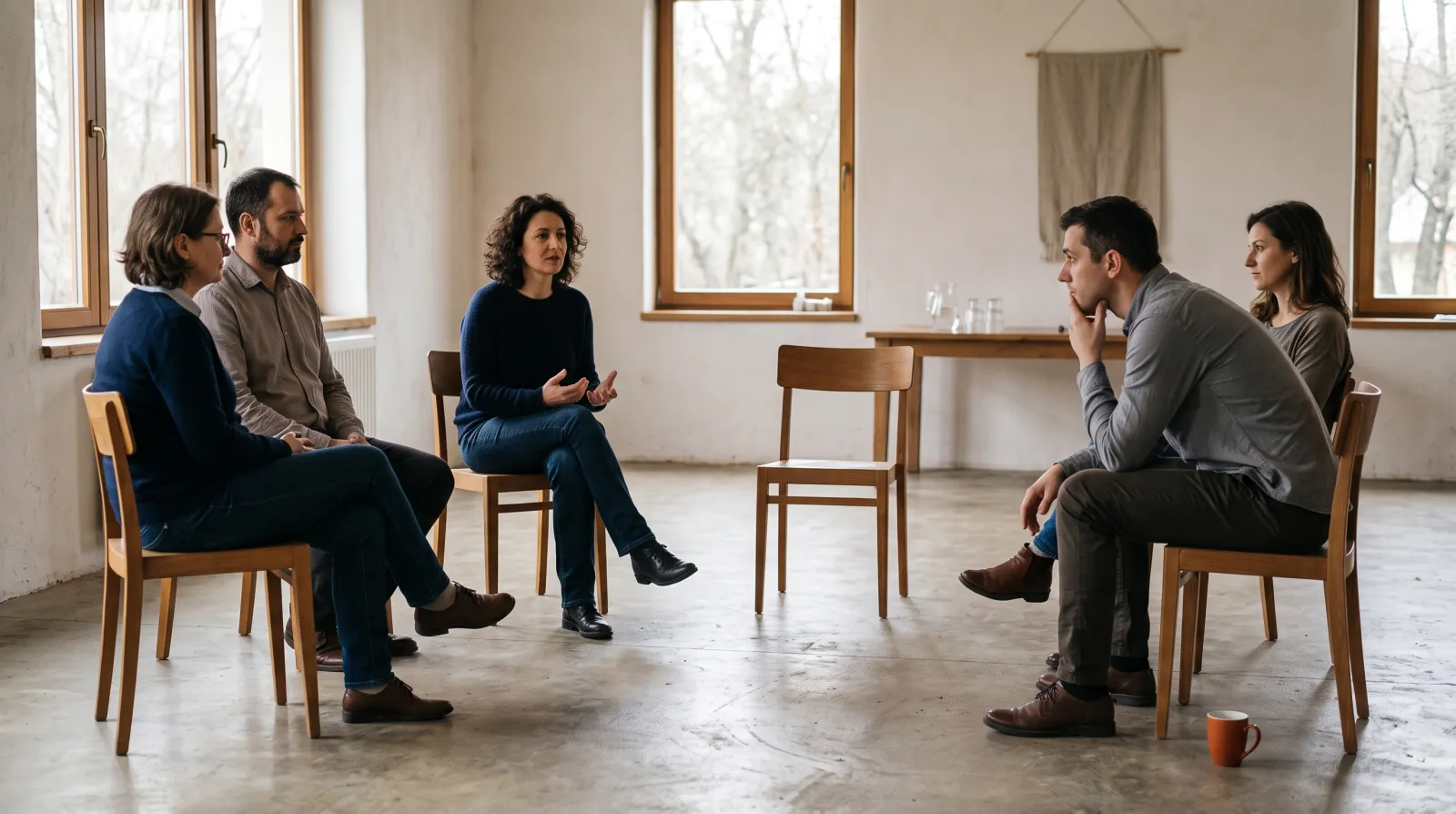
Sound familiar?
Conflicts simmer for months and then explode badly. We bring the unspoken into the light before it festers. Conflict handled with process becomes the source of the team's best decisions.
The team delivers, but the energy is at rock bottom. Team burnout is a signal, not a weather condition. We measure where the energy is leaking and build experiences that reconnect people, with applied improvisation front and center.
- Duration
- ½ day or 1 day
- Format
- Live or online
- Group
- 6–100 participants
- A good fit when
- the team is new, tense, tired, or has just been through a big change.
The relational core: PLAY!
The layer that makes everything else possible. Without psychological safety, people don't voice their opinions. Without connection, they don't build on each other's ideas. Without energy, everything gets slow and formal.
- P: Presence
- Be here, now. Full attention to what's happening in the group.
- L: Liberty
- Space for everyone to contribute without fear.
- A: Acceptance
- Take what comes from the group. "Yes, and" instead of "yes, but".
- Y: Yours to shape
- The group owns its process and its results.
- !: Energy
- You monitor and regulate the group's energy, from start to finish.
See the whole facilitation compass, including handling tension in the "Alignment" category.
How we work on this
- Diagnosis. We distinguish whether the exhaustion comes from meetings, unclear roles, or unresolved conflict: different fixes for different causes.
- Design. We build the right experience: psychological-safety practice through applied improvisation, or a structured conflict-handling framework.
- Facilitation. People actually practice the new behaviors, not just hear about them.
- Follow-up. We check in after 30 days whether the safety built in the room survived the first tense meeting afterward.
Go further with our specializations
For energy and reconnection through applied improvisation: improvizatie.ro. For teams that need to leave the office to reset the dynamic: teamretreat.ro.
Free tools on this topic
Frequently asked questions
We bring the unspoken into the light before it festers further. We use a structured framework (the PAUSE method, nonviolent communication) so tension becomes conversation, not polite avoidance. Conflict handled with process becomes the source of the team's best decisions, not just something to survive.
Team burnout is a signal, not a weather condition. We first measure where the energy is leaking (in meetings, in unclear roles, or in unresolved tension) and only then build the right intervention. A team exhausted by unclarity needs something different than one exhausted by unresolved conflict.
Classic teambuilding aims for connection and fun. We build psychological safety through practice: people actually practice building on each other's ideas, saying uncomfortable things in a safe frame, not just relaxing together for a day. The result shows up in Monday's meetings, not just the group photo.
Is your team tense, tired, or just through a big change?
A free, 30-minute diagnosis tells us both where to start.
Let's talk about your team