
Facilitated teambuilding
A good teambuilding day is remembered. A facilitated one shows up in Monday's meeting. Diagnosis first, a team goal everyone can say out loud, activities chosen for that goal, a debrief that links the game to the work, and a follow-up afterwards. The rest, laughter included, takes care of itself.
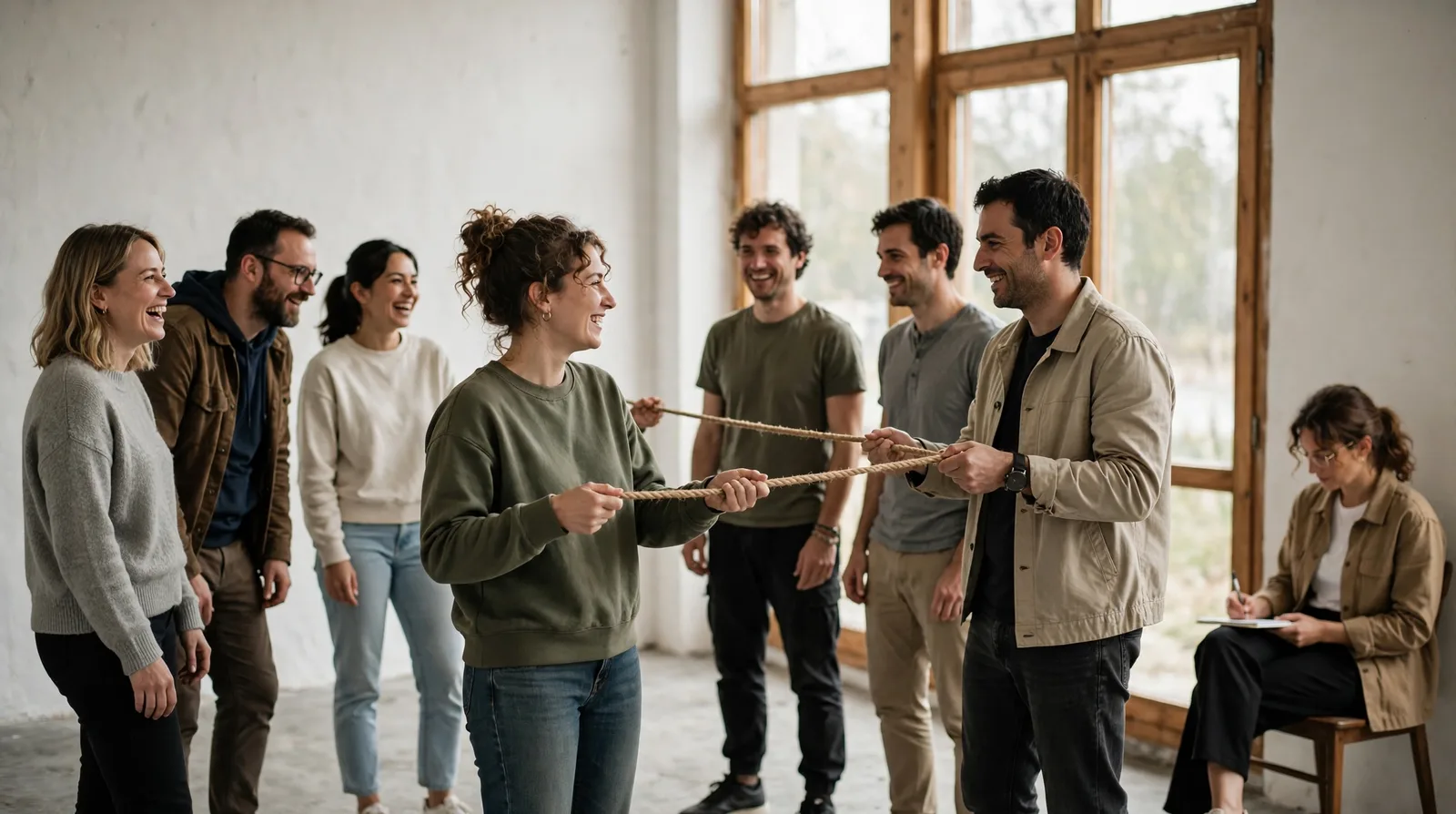
Sound familiar?
We did a teambuilding last year and nothing stuck. People had fun, the group photo looks great, and on Monday everyone went back to the same silences. The day was good, but it had no team goal and nobody connected it to what happens at the office.
I want something for the team, but I don't know exactly what. "Teambuilding" is the word everyone uses for eight different problems. Five of them get worse with a day of fun. Before choosing a format, it is worth knowing which one you have.
The team is fine, we just don't want it to cool off. This is the case where a day of connection really is the right answer. With a clear goal and a good debrief, it becomes a ritual the team asks for on its own.
- Duration
- ½ day or 1 day
- Format
- At your office, in a venue chosen together, or online
- Group
- 6–100 participants; above 60 we work as a team of facilitators
- A good fit when
- the team is healthy and you want to keep it that way, or when you want to find out first what it actually needs.
What "facilitated" means
The difference between a teambuilding event and a facilitated one lies in what happens before and after the activities, not in the activities themselves.
- Before
- A short diagnosis with the sponsor and, where possible, a few conversations with people on the team. We leave with a goal everyone can state: "we want X to be different a month from now".
- During the day
- Activities chosen for the goal, not from a catalogue. Each one has a debrief: what happened, what resembles the way we usually work, what we take with us. This is where the game gets connected to Monday's meeting.
- After
- The team leaves with one or two concrete decisions it made itself. We check at 30 days whether they held.
How we work on this
- Diagnosis. We find out whether the team needs connection or something else: role clarity, a postponed conversation, shared priorities. If it is something else, we say so and propose the right format, even if it is not called teambuilding.
- Design. We choose activities by goal, energy and how much exposure the team can take. Nobody is suddenly pushed in front of the others; the exercises have been tested in the room, with many groups.
- Facilitation. One or more facilitators from our network, chosen for the team's profile. No filming, no individual reporting to HR.
- Follow-up. A conversation with the sponsor at 30 days: what held, what faded, what comes next.
Not what you're looking for?
If the team is fine and what you mostly want is energy, spontaneity and play, with applied improvisation as the method: improvizatie.ro, our specialisation in exactly that.
If you want to take the team out of the office for two or three days, with time to work and time to breathe: teamretreat.ro, retreats for teams and managers.
If the diagnosis shows tension, a conflict nobody names, or tiredness that a day off does not cure, the topic is called team cohesion. If the team has just formed or changed, start from new team.
Free tools on this topic
Frequently asked questions
The activities can be similar. The difference is in what happens before and after: a diagnosis that sets a team goal, a debrief after each activity that links the experience to the way you usually work, and a follow-up at 30 days. Without these, the day remains a pleasant memory. With them, it becomes a decision the team made on its own.
Yes, through improvizatie.ro, our specialisation in applied improvisation. On Facilitare.ro we start with the diagnosis and then choose the format: sometimes it is improvisation, sometimes a cohesion workshop or a role-clarification session. The diagnosis picks the method, not the other way round.
When you can name the subject that would make the room tense up. A conflict nobody says out loud, unclear roles or priorities everyone understands differently are not solved by a day of fun and often get worse. In those cases we propose something else, under its own name: team cohesion, alignment or a facilitated conversation.
Half a day or a full day, for groups of 6 to 100 participants. Above 60 people we work with a team of facilitators: one leading the process and one per small group. The format can be at your office, in a venue chosen together, or online.
Want a team day that still shows afterwards?
A free 30-minute diagnosis tells us both where we are starting from.
Let's talk about your team