
What kind of teambuilding do you actually need
"We want a teambuilding, to relax a bit." That sentence reaches us a few times a month, always in the same words. Behind it sit eight completely different problems, and five of them get worse if they receive a day of fun.
Nobody asks for a teambuilding because they lack a teambuilding. The team wants to solve something, and "teambuilding" is the only word in the organisation's vocabulary that means "I have a problem with people and I don't know what it's called". Translating from the word requested to the real problem is the cheapest decision in the whole project, and almost nobody does it before asking for a quote.
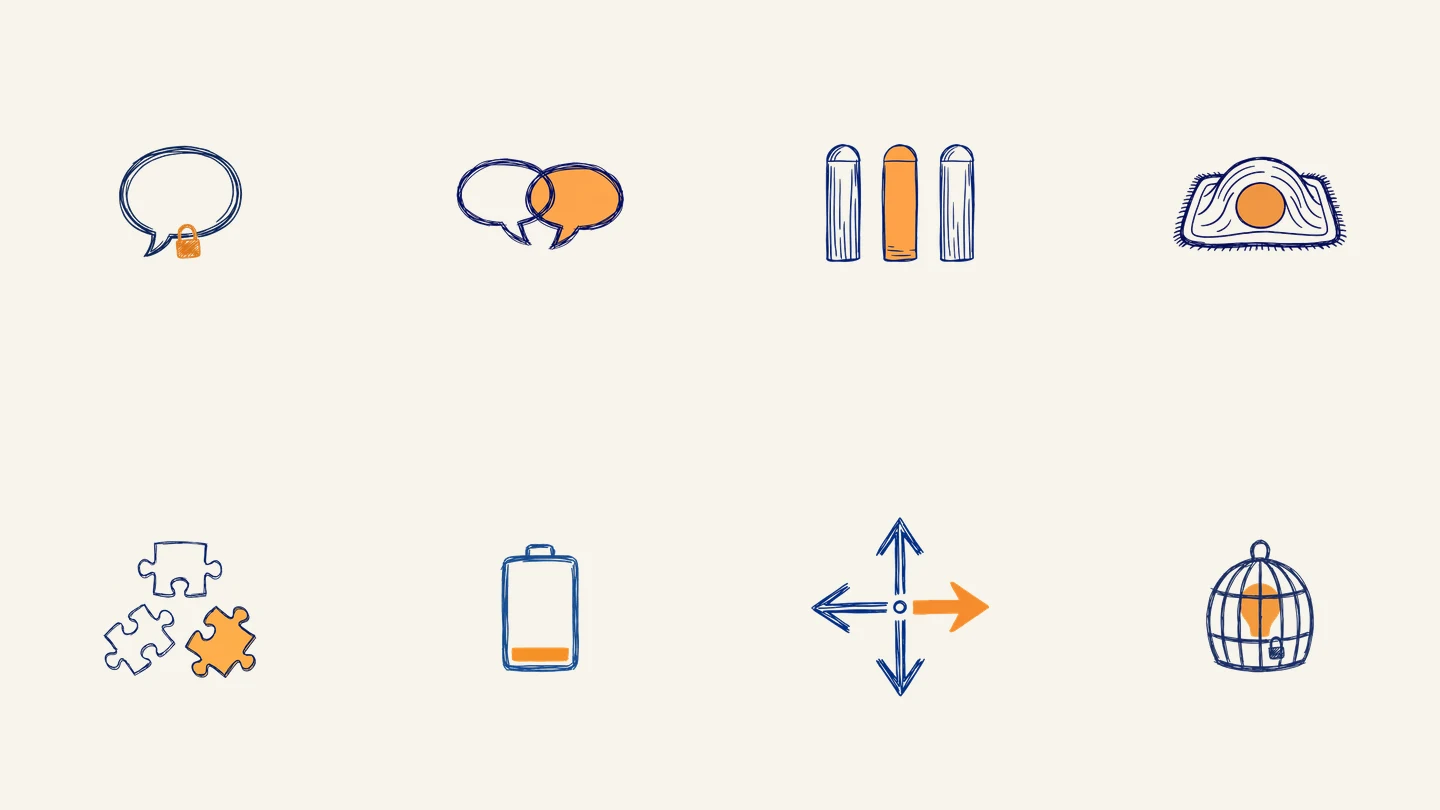
Below are the eight, in the words we hear them on the phone. Read them in turn and stop at the one that sounds like your team right now. If it seems like there are three, look at the order in which you recognised them: the first is usually the symptom, the second is the problem.

"They don't say things directly. It's a bit tense."
What it really is: low psychological safety. People calculate what to say before they open their mouths, and the calculation uses up exactly the resource a good idea or a useful objection would have come from.
The practical sign is that meetings end in agreement and the disagreement shows up on private channels within the next two hours. A pleasant day outside the office doesn't touch that. People will genuinely enjoy themselves and go back on Monday to the same arithmetic, because nothing that happened on Friday showed them that this time contradicting someone costs nothing.
What it needs: connection and trust, with measured vulnerability and a structure that distributes the risk instead of putting it on the first person to speak. This is the territory of team cohesion and, when the pattern is old, of emotional culture.

"We get lost in the details. We don't listen to each other."
What it really is: faulty communication. Everyone waits to speak instead of listening, and the discussion advances by overlap, not by building.
The difference from the previous problem is important. Here people are allowed to say what they think, but nobody catches what the other said. It is a problem of muscle, not of climate, and it is trained by repetition, not by discussing the importance of listening.
What it needs: training in listening, not in speaking. Here applied improvisation really is the right format, because almost every exercise is impossible to finish if you haven't heard what the other person gave you.

"Everyone pulls for themselves. The departments don't collaborate."
What it really is: silos. Nobody has a real reason to depend on anyone else, and collaboration stays a value posted on the wall and rewarded nowhere in the way work is measured.
Silos almost never come from antipathy. They come from objectives that can be reached separately. As long as each department can tick off its year without the other, no day of connection changes the calculation, however pleasant it is.
What it needs: missions in which nobody wins alone, followed by a discussion about what exactly in the way they are measured pushes them back into the silo. Without the second part, the day remains a nice exception.

"It's just some small quarrels. The atmosphere has soured."
What it really is: an undiscussed conflict, working underneath. The diminutive in the request ("some small quarrels") is the best clue that the subject already has an age nobody wants to name.
This is the case where a day of fun does measurable harm. If people spend a good day together and aren't allowed to name the thing everyone feels, the message that remains is that the problem isn't discussed outside the office either. You spent the budget and confirmed the silence.
What it needs: structured facilitation, with the subject on the table and explicit rules about what happens to what is said in the room. We wrote separately about what a day with a team in conflict looks like.

"We have three new colleagues. Two teams merged."
What it really is: a new team, with no shared norms yet. Nothing is broken, simply nothing has been built yet: who talks to whom, what is asked by message and what by phone, how polished something must be before you show it.
Here the original request is correct and needs no translation. It is one of the few cases where "we want to get to know each other better" really does describe the problem.
What it needs: integration. Who with whom, and by what rules. A connection day is exactly the right intervention, provided it ends with a few written agreements, not just a good memory.

"They've plateaued. They need energy."
What it really is: routine and fatigue, with no conflict underneath. People get along, the work goes on, but the year has been long and nothing they do surprises them any more.
You can run the check yourself in thirty seconds: if you can name the subject that would make the room tense up, you aren't here, you are at problem 1 or 4. If you really can't find one, you are allowed to buy a good day without any further justification.
What it needs: energising and celebration. Here fun is the right answer, and applied play formats do their job without pretending to solve anything else.

"We don't really know where we're heading."
What it really is: unclear priorities. Everyone understands something different from the same strategy, and the disagreement shows up only at delivery, when it becomes visible that two people optimised for different things.
It is often confused with a motivation problem, because it looks the same from outside: people working slowly and without drive. The difference is that here the tiredness comes from the effort of guessing what matters, not from routine.
What it needs: alignment on the future, not on the mood. A day in which you write down what you are pursuing in the next two quarters and, more importantly, what you are not pursuing.

"They don't come up with ideas. They're afraid of making mistakes."
What it really is: creativity blocked by the cost of mistakes. The ideas exist, but every person in the room has already calculated what happens to the author of a bad proposal and decided it isn't worth it.
It is solved by changing the cost, not by making a request. "I want more initiative from you", said by a manager in an organisation where a mistake is remembered for two years, produces not one extra idea.
What it needs: a place where a mistake costs nothing, and an explicit transfer between what happened there and what changes in how ideas are received on Monday. LEGO® Serious Play® and serious-play exercises do the first part; the second part is done by leadership, or by nobody.
The rule: five of the eight aren't solved with fun
Problems 1, 2, 3, 4 and 7 call for clarification, structure or a subject put on the table. Only 5, 6 and 8 respond well to a day built around a pleasant experience, and 8 only if it is followed by a real change in how ideas are received.
The cost of the confusion isn't the budget. A team that needs clarification and receives a day of fun leaves more frustrated than it arrived, because it has seen that there is time and money for everything except the conversation that needed to happen. And the next session proposal, however well designed, starts with a group that already believes these are theatre.
How to ask for what you need
When you ask for a quote, change one question. Instead of "what activities do you do", say what you want to be different in a month. A good provider will translate that sentence into the problem by themselves, and will also tell you when the answer is that you don't need them.
If you are still not sure, the control question is the one from problem 6: can you name the subject that would make the room tense up? If yes, you need facilitation. If not, you are allowed to buy a good day.
We wrote separately about the difference between teambuilding and cohesion, for the case where the day has already been a success and two weeks later nothing has changed. And if you want to start from the blockage instead of the format, the Team Compass does exactly that separation.
Which of the eight is yours?
Not the first version that comes to mind. The second is usually closer. The first conversation is a free 30-minute diagnosis, and it sometimes ends with "you really do need a teambuilding day". When that is the case, we say so.
Let's talk about your team